Day 1: Arrive in Tokyo.
Arrive at Tokyo, pass through immigration; collect your luggage and clear customs. If you have booked an arrival transfer through us, then our assistant will meet you just outside of the secure area, and they will take you to the hotel by private van transfer.
Check into the hotel and relax. Our hotel is located in the Ginza district, Tokyo’s most famous up-market shopping, dining, and entertainment district.
Arrival time is scattered this evening, so have a good rest, ready for the week ahead.
Overnight: Millennium Mitsui Garden Hotel Ginza.
Day 2: Tokyo: Markets and Architecture
The best way to discover a city is by walking it and riding it’s rails. Today we do both.
We meet this morning for breakfast to say hi to each other, and to go over our upcoming journey. After breakfast, we embark on a full-day tour to discover some of the complex and rich culture, history, and society that underlie the city.
Our first stop this morning is the stunning Kengo Kuma-designed >Nezu Museum, where we enjoy a collection of pre-modern Japanese and East Asian art. The Museum synthesizes traditional art forms, modern Japanese architecture, and a Japanese landscape garden into one harmonious complex.
After visiting the Nezu, we wander through Aoyama to arrive at Spiral, characterised by a spiral-shaped ramp, filled with an iconic space called the Atrium which is bathed in natural light.
We return to our hotel, and your evening is free.
Overnight: Millennium Mitsui Garden Hotel Ginza. (B / L)
Day 3: To Matsumoto
We will forward our luggage to Takayama this morning and travel with only an overnight bag. Our luggage will meet us in Takayama.
After breakfast, we taxi to the station and board our Shinkansen to Matsumoto. We will grab a bento box at the station before we board for our lunch. (Our Driver will meet us at Matsumoto Station.)
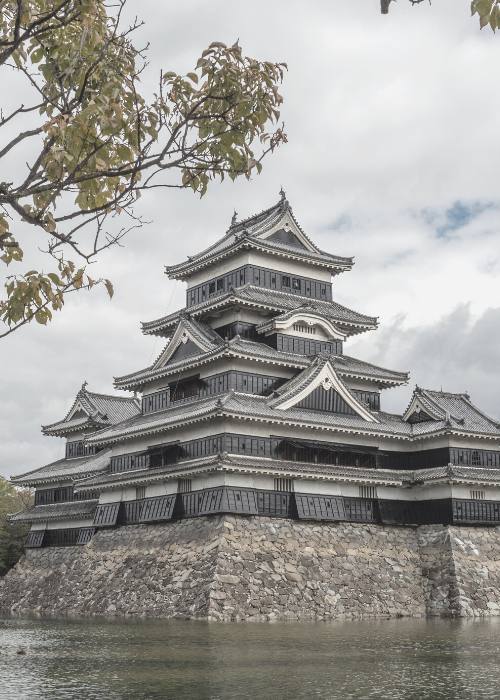
Home to one of Japan’s last remaining original castles, Matsumoto, located in the shadow of the Japanese Alps, is a small, historic city.
Matsumoto is also the home of internationally renowned artist Yayoi Kusama. Many of the artist’s pieces can be seen in the Matsumoto City Museum of Art, which we will visit this afternoon.
As a registered national treasure, Matsumoto Castle is without doubt the beacon that draws visitors to the city. Matsumoto Castle. is known to the Japanese as “the crow” because of its black color. It is one of just twelve original castles that exist in Japan today and offers a stunning view in all seasons.
We then check into the Matsumoto Jujo Hotel for the night. Matsumoto is most famous for its castle, but it is also locally recognized for its onsen. With a history dating back more than 1300 years, Asama Onsen, Matsumoto’s hot spring area, was once frequented by Feudal Lords and Samurai.
Matsumoto Juju is a ryokan (traditional inn) whose history dates back to 1686. It was designed as a book lover’s dream, with its old onsen converted into a bookstore. There is also an onsite bakery, shop, café, and apple cider brewery.
The guest rooms at Matsumoto Jujo are complete with their own open-air baths.
We dine tonight at the in-house restaurant, 365 + 2 (367). The menu is a culinary journey, from the headwaters of Mt. Kobushigatake to the waters of the Sea of Japan and as far north as Sado Island.
After dinner, it is time for a well-earned nap.
Overnight: Matsumoto Jujo, Asama Onsen (B / Bento Box / D).
Day 4: To Takayama
After breakfast, we take a stroll through charming Nawate Dori Shotengai Street and grab a coffee and lunch around Nakamachi-dori. Nakamachi Street is known for its traditional storehouses, called kura, which are characterized by their black-and-white, criss-cross patterned walls. This beautiful street is also a popular shopping area where you can buy Japanese handicrafts, such as pottery, lacquerware, and wooden crafts.
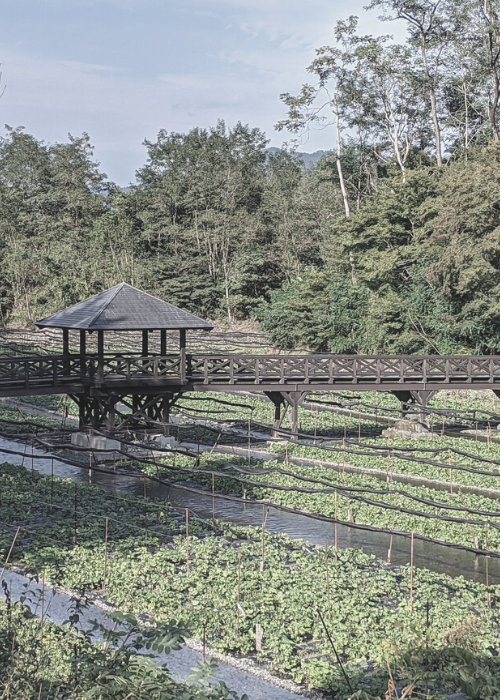
We then head out of the city and explore Azumino’s Daio Wasabi Farm – one of Japan’s largest producers of wasabi. Known in the West for its nasal-clearing heat, real wasabi has a much more subtle and versatile taste than many people realize.
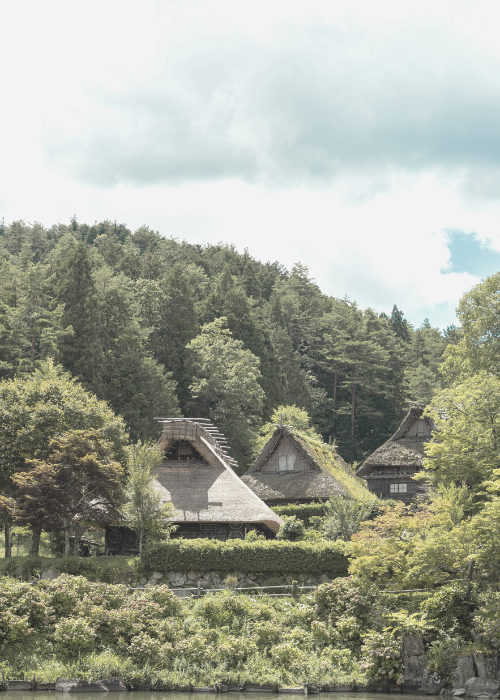
We continue to Takayama, located deep within the mountains of Central Japan, famous for the excellent preservation of its Edo Period (1603–1868) historical center, known as the ‘Sannomachi’.
We check into our Ryokan accommodation, Oyado Koto No Yume which offers Japanese-style rooms that feature tatami-mat flooring and traditional futon bedding. This ryokan, introduced in Michelin Green Guide Japan, has indoor or outdoor hot-spring baths, and a semi-outdoor hot tub for private use.
After a big day, your evening is free.
Overnight: Oyado Koto No Yume. (B / L)
Day 5: Takayama
Takayama has retained much of its traditional architecture and is well-known for its crafts, particularly yew-wood carving, Shunkei lacquerware, pottery, and furniture. Today, we’re doing a walking tour where old traditions are alive and well.
We will stroll through the Miyagawa Morning Market, Takayama Jinya, and Sanmachi Street, which will take us to historic shops sporting beautiful architecture. We visit Yoshijima Heritage House, built in 1908, which was a sake brewery and still sports a huge sakabayashi (sign of a shop dealing in sake made of Japanese cedar leaves) hanging under the eaves.
We visit the Kusakabe Folk Museum, constructed in 1879. Built to be solid with overlapping eaves, this house is the first old merchant’s house designated as a National Important Cultural Treasure, along with the adjoining Yoshijima House.
After lunch, we check out a sake brewery like Funasaka. Then there will be free time for you to explore the city further and hunt for special treasures to bring home.
This evening, we enjoy dinner at a Japanese-style restaurant designated as a tangible cultural property of Takayama.
Overnight: Oyado Koto No Yume. (B, L, D)
Day 6: To Kanazawa via Hida-Furukawa
After breakfast, we travel to Hida-Furukawa, a hidden treasure in the Japanese mountains. This enchanting town transports you to a bygone era with its beautifully preserved Edo-period architecture, rich history, and artisanal traditions.
We wander the historic Shirakabe Dozogai Street. Named after its iconic white plaster walls—sharply contrasting to the dark wooden beams—the street translates to “White Wall Warehouse District.”
We continue to Kanazawa and check into our hotel. Our hotel for the next four nights, the upscale boutique Hyatt Centric is just seconds from Kanazawa Station and is the perfect launchpad for exploring the city’s authentic art, shops, restaurants, and sights.
After check-in and a refresh, we will meet in the FIVE Grill and Lounge for dinner.
Overnight: Hyatt Centric Hotel Kanazawa (B / L / D)
Day 7: Kanazawa
Today, we’ll enjoy a full-day tour of Kanazawa.
We check out the Omicho market. It dates to the Edo period (17th century) and is known throughout Japan for its fresh seafood and delicate sushi. We’ll have lunch at the market.
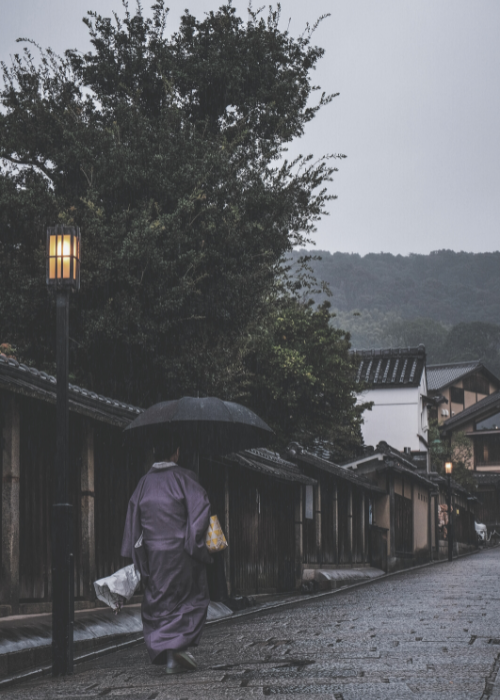
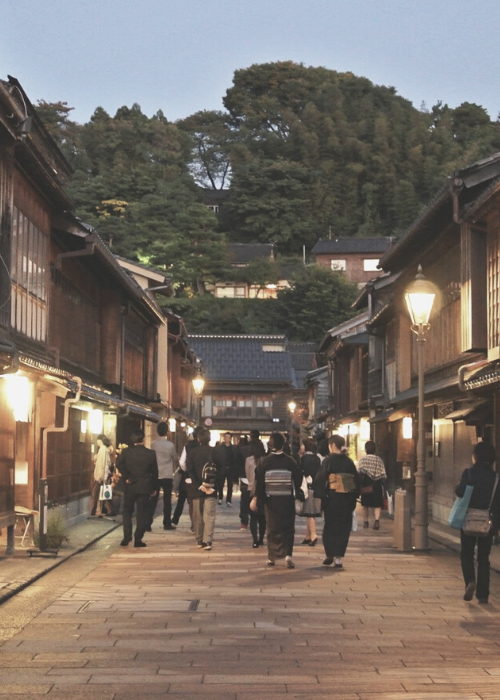
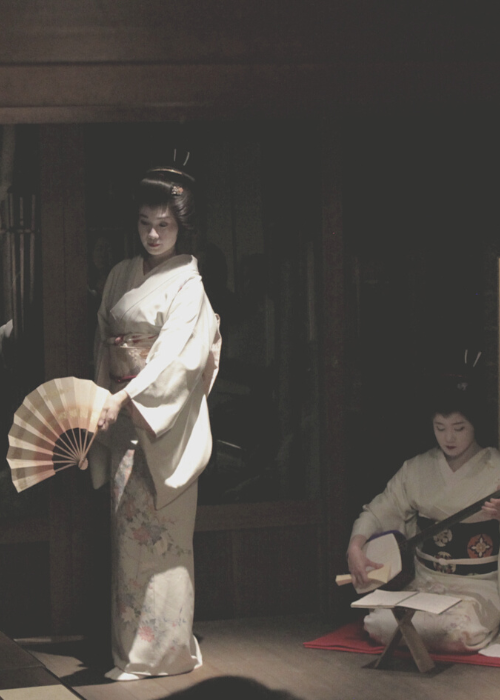
We wander to the smaller and less crowded Kazuemachi Chaya area, a former Geisha district known for its beautiful cherry tree arcade.
Across the Asano-gawa River, in the Higashi Chaya District, we visit the Kaikarao Tea House. With over 200 years of history, the Tea House is the largest chaya in the Higashi Chaya-gai District and is a registered historical building.
Over 99 percent of Japan’s gold leaf is produced in Kanazawa. Its boutiques, galleries, and even cafes celebrate this luxurious craft. We will stop at Hakuza Hikarigura in Higashi Chaya, which has a Japanese storehouse completely covered in a layer of gold leaf inside and out, with 20,000 sheets of gold leaf on the outside alone.
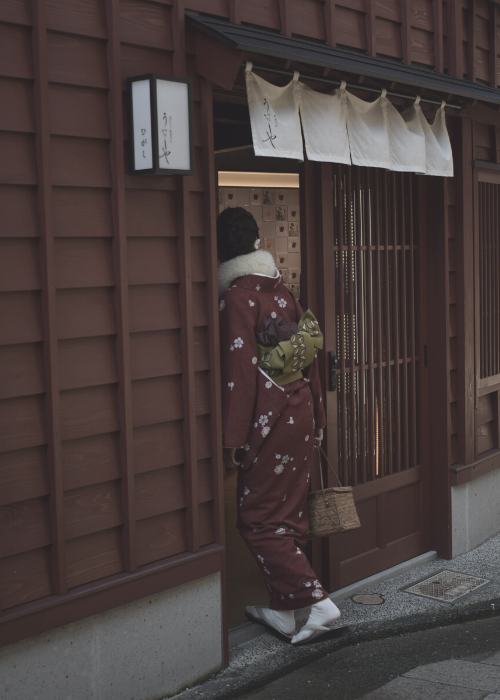
We will also drop into Ochaya Shima in the Higashi Chaya-gai district. Ochaya Shima is a historical geisha house which is now a museum and offers a look at the life of the geisha who once entertained here.
We return to the hotel, and after a fabulous day, our evening is free.
Overnight: Hyatt Centric Hotel Kanazawa (B / L)
Day 8: Kanazawa
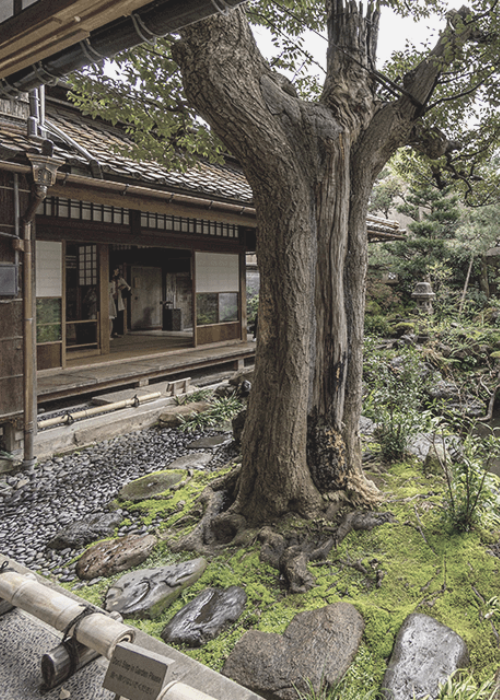
After breakfast, we start an incredible day of art and gardens. First, we visit Nagamachi, the old samurai district of Kanazawa. Here, we find Nomura-ke, a restored samurai house with a stunning garden that showcases the artefacts from the golden era of the Japanese warriors.
Then, to the 21st Museum of Art. It was designed without a front or back to discourage patrons from approaching the museum and its art from only one direction. Interspersed among the spaces of the museum are some permanent installations that include works such as Leandro Erlich’s “Swimming Pool”, a pool where people appear to be underwater.
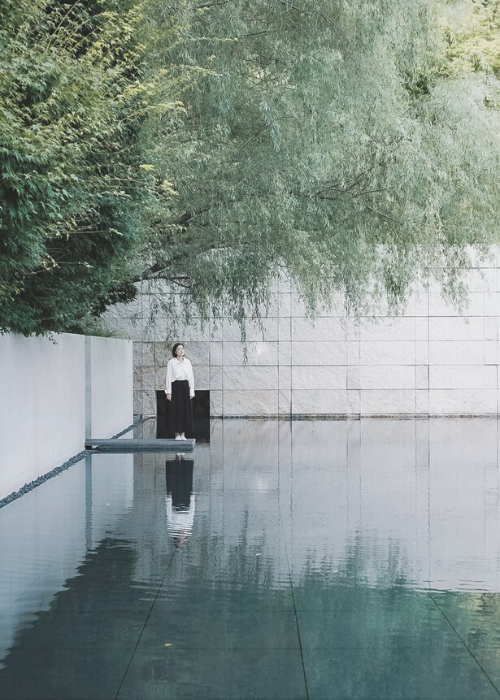
We then visit the D.T. Suzuki Museum, opened to commemorate and celebrate the life and work of Suzuki Daisetz Teitaro (1870-1966), an influential Japanese Zen philosopher born in Kanazawa. The garden is arguably the museum’s most important feature, as its clean and simple design embodies Suzuki’s teachings’ abstract beauty.
We have a delightful lunch of Kaga-ryori specialities (authentic Kanazawa/Ishikawa cuisine)
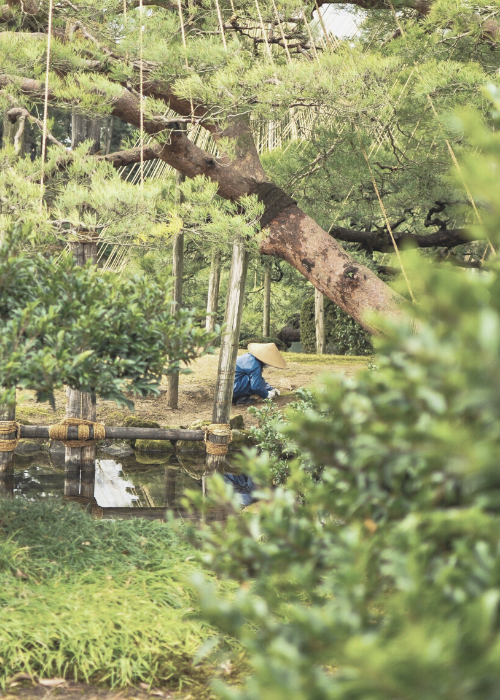
After lunch, we wander over to the divine Kenrokuen. Considered one of Japan’s three most beautiful gardens.
We return to the hotel. Your evening is free.
Overnight: Hyatt Centric Hotel Kanazawa (B / L )
Day 9: *Noto Peninsula
The *Noto Peninsula is remote, sparsely populated and home to jagged coastlines, thriving agricultural traditions, and centuries-old craft cultures. After breakfast we drive out of Kanazawa towards Wajima, in time for the morning market. Every day vendors sell local produce, snacks, and wajima nuri, the famous local lacquerware. This market is one of the three largest in Japan, and more notably, it’s the oldest, and has been running for over 1000 years.
We continue north to the Senmaida Rice Fields. Senmaida is home to one of the biggest rice fields in Japan with over 2000 terraced rice paddies tucked along the dramatic hillside.
The people of the Noto Peninsula have been harvesting salt from the sea using traditional methods for over 500 years. The Okunto Salt Farm Village gives you a unique opportunity to learn about and observe this first hand.
We will stop at a Matsunomidori Ryokan; a Museum, an Art Gallery, and Onsen and a Tea House where we will enjoy a tea. We will then head to LE MUSEE DE H, founded by one of the most famous Japanese pastry chefs.
We return to Kanazawa.
We dine out on outstanding Kanazawa cuisine for our final evening in Ishikawa tonight.
Overnight: Hyatt Centric Hotel Kanazawa (B / L / D)
Day 10: Eiheiji
We will forward our luggage to Tokyo this morning and travel with only an overnight bag.
We first transfer to Eshikoto Sake Brewery, a local brewery that has been deeply inspired the concept of ‘shizen’ (nature), by filtering water from the neighboring Kuzuryu River. An expert sommelier will guide us through the brand’s three signature sake varieties: Eshikoto Awa (sparkling sake), Tokoshie (aged sake) and Umeshu (plum wine) in a minimalist architectural space.
After sake tasting and lunch, we continue to the Eiheiji Temple for an evening of Zen and meditation. Eiheiji, “The Temple of Eternal Peace”, is one of the two head temples of Soto Zen. It is located deep in the mountains, near the northwest coast of Japan.
This temple was founded by Zen Master Dōgen in 1244 and today it serves as a training centre for monks, with over 200 currently residing there. The Complex features over 70 buildings connected by covered walkways, designed to protect from heavy snow.
We check into our accommodation. The Hakujukan hotel of Eiheiji Temple offers guests a unique blend of traditional Japanese inn facilities and services, along with the opportunity to participate in Zen meditation as a monastery.
You can enter the Kaiya-no-Ma room for meditation, and contemplate the Zen Garden that can be seen from the vantage point of the Kaiya-no-Ma. The open-air bath, Kosuikai, connecting to the inner bath lets guests bask in the tolling of the bell of Eiheiji.
A quiet and grounding end to the journey, steeped in spiritual reflection.
Tonight, we eat in the restaurant supervised by the temple which offers Buddhist vegetarian cuisine.
Overnight: Hakujukan Hotel (B / L / D)
Day 11: To Tokyo
Morning services (morning sutra chanting) are held 365 days a year. Dozens of monks gather in one place and chant with one heart, creating a solemn atmosphere. We can take part in the morning service just before dawn by the monks of Eiheiji temple, including sutra reading, and burning incense.
After chanting and breakfast, we‘ll transfer to Fukio Station to board our Shinkansen to Tokyo.
On arrival in Tokyo Station, we taxi back to our hotel for our final evening.
We will enjoy a last meal together tonight in Ginza.
Overnight: Millennium Mitsui Garden Hotel Ginza. (B / Farewell Dinner)
Day 12: Depart
Your final day. Say farewell to Japan!
Enjoy a lazy breakfast, and then prepare for your transfer to the airport. (B)