Day 1: Arrive in Tokyo.
Arrive at Tokyo, pass through immigration; collect your luggage and clear customs. If you have booked an arrival transfer through us, then our assistant will meet you just outside of the secure area, and they will take you to the hotel by private van transfer.
Check into the hotel and relax.
Arrival time is scattered this evening, so have a good rest, ready for the week ahead.
Overnight: Millennium Mitsui Garden Hotel Ginza.
Day 2: Tokyo to Okayama / Kurashiki
This morning we meet at breakfast for a ‘Meet & Greet’ before we transfer to the train station for our Shinkansen to Okayama. This is about a 3.20 train ride.
In Okayama, we are picked up by our Private Van and visit Okayama Korakuen, ranked as one of the three best landscape gardens in Japan, along with Kanazawa’s Kenrokuen and Mito’s Kairakuen.
Across the Asahi River from Korakuen Garden is Okayama Castle, known as Crow Castle because of its black outer wall. It was initially completed in 1597 but was destroyed in World War II; the current castle is a reconstruction (as is the case for most Japanese castles).
Time permitting, we make a stop at the small but delightful Hayashibara Museum of Art. Located in a former guesthouse of Okayama Castle, it is home to a diverse range of artifacts such as swords, armour, kimonos, pottery, Noh costumes, furniture, paintings, and lacquers from the Ikeda clan.
We then transfer to Kurashiki and check into our accommodation.
Overnight: Royal Park Hotel Kurashiki (B / Bento Box / Light Dinner)
Day 3: To Uno Port
Kurashiki has a preserved canal area that dates back to the Edo Period (1603-1867), when the city served as an essential rice distribution centre. Alongside a picturesque canal, buildings reflect the town’s rich mercantile history. Many of Kurashiki’s former storehouses have been converted into museums, boutiques and cafes. Spend the morning wandering around the Bikan Quarter.
We then depart for Uno Port. En route, we will stop at the Betty Smith Jean Museum, where we will learn about the history of domestically produced jeans in Japan. Besides the museum, there is a store, a café, a factory and the ‘Kurashiki Order Jeans’, where we can *design and get made, one-of-a-kind jeans made to measure.
We continue to Uno Port and check into our hotel – Uno Hotel. Uno Port is the source of the ferries that travel to the Setouchi islands. The atmosphere throughout is faultlessly tranquil; a spa features indoor and outdoor onsen baths as well as saunas and treatments, and the restaurants include a classic Japanese and a modern French option.
We check in, rest, and refresh. We dine in-house this evening.
Overnight: Uno Hotel. (B / D)
Day 4: Naoshima
Today, we go by ferry to Naoshima Island. We are picked up by our Private Van, and begin our Naoshima discovery.
We start our day with entry to one of the Art House Projects. The Art House Project sees artists take empty houses scattered about residential areas and turn the spaces into works of art, weaving in history and memories of the period when the buildings were lived in and used.
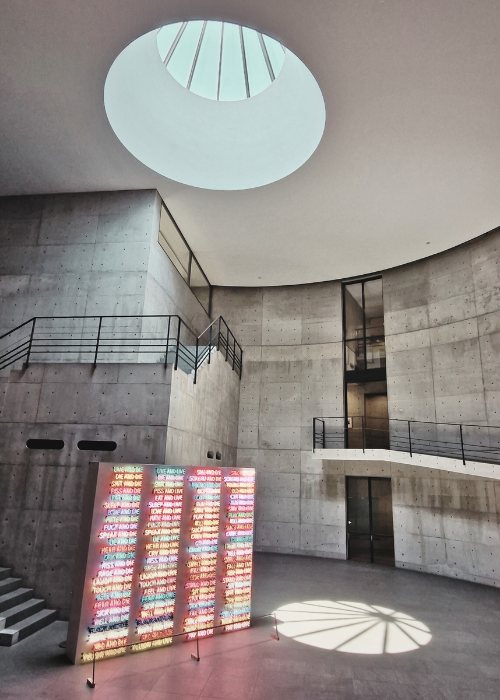
Before jumping back onto our bus, we will visit the Naoshima New Museum of Art, designed by Tadao Ando, his tenth architectural work among the art facilities of Benesse Art Site Naoshima.
We visit the Chichu Art Museum, also designed by architect Tadao Ando,
Before arriving back at the port, we will visit another favourite Naoshima gem.
And, of course, we see Yayoi Kusama’s famous giant pumpkin, and SANAA-designed Marine Station at Miyanoura Port.
We return to Uno Port in the evening on the ferry. After a huge, but fabulous, day your evening is free.
Overnight: Uno Hotel. (B / L)
Day 5: Teshima Art Island
*Our luggage will be forwarded to Kyoto this morning.
This morning, we board our ferry to Teshima Island. Again, we have a Private Van to ferry us around the island.
What once was a rural island suffering from depopulation has been revitalised by the Setouchi Triennale Art Festival and several museums built on Teshima. It offers stunning coastal views, rolling hills, and vibrant flora.
We visit sites including a favourite installation that brings art into the island’s natural landscape and embodies global unity and Yokoo House.
We eat lunch at a restaurant with an ocean view that offers popular fare made with a wide variety of Teshima Island ingredients.
One of the main highlights of Teshima is the Teshima Art Museum, a remarkable architectural and artistic creation nestled within a hillside. Standing amongst terraced rice fields, the simple concrete structure stimulates its visitors’ senses with the play of water drops on a concrete surface.
We return to Uno Port by ferry and to our hotel. We dine together this evening in-house to celebrate our amazing journey on the Art Islands.
Overnight: Uno Hotel. (B / L / D)
Day 6: Kyoto
This morning after breakfast, we are transferred back to Okayama Station and board or Shinkansen to Kyoto.
We are met at Kyoto Station by our driver and we transfer to the divine and serene Shōrenin Temple. It is is an intimate temple situated against the green of the Higashiyama Mountains. Because it was originally built as a residence rather than a religious building, the place looks more like a villa than a temple. The buildings look over an exquisite garden, which is centered on a tranquil carp pond.
To continue our zen day, we then visit a teahouse that offers a contemporary approach to the art of Japanese tea. Installed at the back of a shop, in the former warehouse of a beautiful machiya, this salon highlights high-quality organic teas in an atmosphere of dim light and calm gestures. Each service, neat and precise, is accompanied by delicate sweets, for a complete experience that requires taking your time.
After this sublime experience, we transfer to our hotel, and check in. This evening, we dine together at the hotel.
Overnight: Nogha Hotel (B / D)
Day 7: Kyoto
After breakfast, we visit the The Kyoto Museum of Crafts and Design, The museum highlights the city’s 74 traditional craft categories through multimedia displays and pop-up exhibitions that zero in on themes such as geiko (or geisha) costumery and kabuki dance-dramas.
We can then wander over to an art-focused bookstore offering a curated selection of books, handicrafts, and stationery centered around the themes of Art, Japanese Living, and On Japan.
We will also drop into a stunning lifestyle store and gallery; a refined ceramics shop showcasing modern Japanese folk art and seasonal collections from local artists.
Lunch will be at along the banks of a lovely canal near the Shirakawa Bridge where a small kitchen showcases truly good products made in the Tango Peninsula.
We then return to our hotel via Shinmonzen Street, dotted with many antique shops that carry Japanese pottery, paintings, woodblock prints, hanging scrolls, and other art and crafts.
Your evening is free..
**Tonight is the perfect night to join me at one of my favourite Kyoto eateries. This is an optional evening.
Overnight: Nogha Hotel (B / L)
Day 8: Kyoto – Miyama – Kyoto
Today after breakfast, we drive out of Kyoto for a day trip. We will head into the countryside for amazing architecture, art, nature and traditional crafts.
For centuries, Miyama has provided a peaceful mountain retreat from nearby Kyoto. The region is well known within Japan for its traditional village atmosphere, with many small hamlets nestled between steep forested mountains.
We spend the day exploring the thatched village of Kayabuki no Sato and surrounds; the Kayabuki Art Museum & Folklore Museum; the Little Indigo Museum (a privately owned museum of indigo dyeing artist, Hiromichi Shindo); Chii Hachiman Shrine; the Ishida Farm House; and the Shrine of Karasu Dengaku (designated a Kyoto Prefectural Intangible Folklore Cultural Property); all dependent on opening days.
Lunch will be home-grown buckwheat noodles, Miyama water, and hand-made soba served in a thatched roofed house.
We return to Kyoto in the early evening. Your evening is free.
Overnight: Nogha Hotel (B / L)
Day 9: Kyoto
This morning, we visit Kawai Kanjiro’s house and studio. For lovers of design, art, and architecture, it is a rare opportunity to discover the style and humanity of a wonderful Japanese artist who influenced generations of potters and craftsmen. Left exactly as it was when Kanjiro lived in it with his children and grandchildren, the home features his vast body of work, which includes ceramics, sculpture, wood carvings, and calligraphy. It is one of very few original Kyoto residences open to the public.
We will then wander over to a few main pottery streets Chawanzaka (Teapot Lane) and the adjacent Sannenzaka and Ninenzaka, both historic slopes filled with shops selling Kyo-yaki (Kyoto pottery). Chawanzaka leads directly to *Kiyomizu-dera temple, and Sannenzaka / Ninenzaka offer preserved atmospheres for exploring crafts, street food, and historic architecture.
Your afternoon is free for any final sightseeing or shopping.
Tonight we meet for our final meal together.
Overnight: Nogha Hotel (B / D)
Day 1o: Depart
Your final day. Time to say farewell, Arigatou Gozaimashita. (B)